

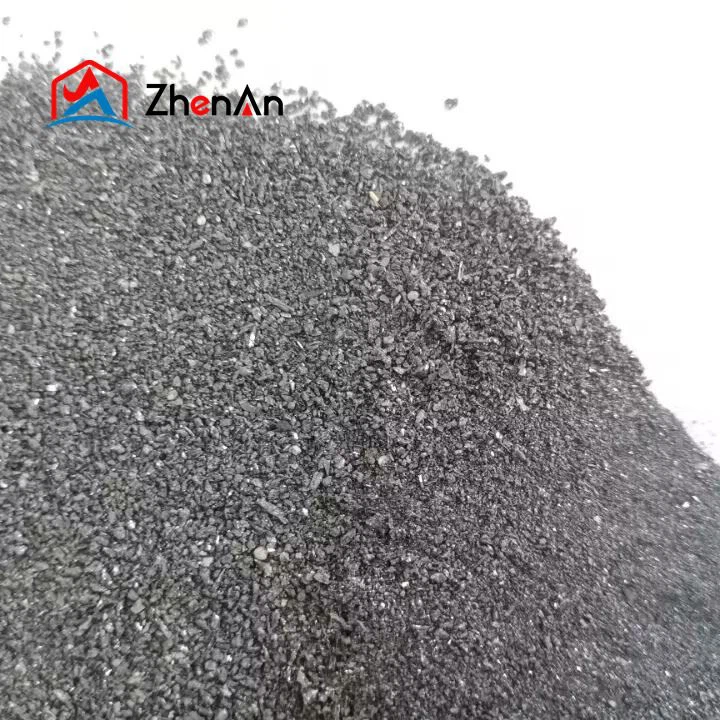
Ceramics Material Silicon Carbide Powder
Silicon carbide is a covalent compound and is extremely hard and wear-resistant. It is also chemically inert and stable at high temperatures, making it useful for high-temperature applications. It is resistant to oxidation and can withstand exposure to a variety of acids and alkalis.
Descripció
Description
Silicon carbide (SiC) powder can be produced through several methods, including:
Acheson process: This process involves heating a mixture of silica sand (SiO2) and petroleum coke in an electric resistance furnace at high temperatures. The heat causes a chemical reaction between the two materials, resulting in the formation of silicon carbide powder.
Lely process: This process involves heating a mixture of silicon and graphite in a vacuum at high temperatures. The silicon melts and reacts with the graphite, forming silicon carbide powder.
Chemical vapor deposition (CVD): In this process, a gas containing silicon and carbon is introduced into a reactor chamber, where it reacts to form silicon carbide powder on a substrate.
Sol-gel process: This process involves mixing a silicon source (such as tetraethylorthosilicate, or TEOS) with a carbon source (such as sucrose) and heating the mixture at high temperatures. The heat causes a chemical reaction, resulting in the formation of silicon carbide powder.
Specification
Chemical formula: SiC
Appearance: Fine powder, typically black or dark gray in color
Melting point: 2,730°C
Boiling point: 3,820°C
Density: 3.16 g/cm³
Solubility: Insoluble in water


Etiquetes populars: ceramics material silicon carbide powder
Enviar la consulta
Potser també t'agrada